Emerging Workforce Initiative
  • Home
  • Net Work Learning
  • Publications
  • About

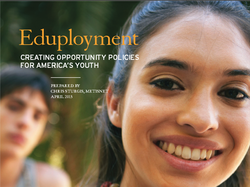
Youth Transition Funders Group: Eduployment Policy Report Released

4/30/2013

 
Picture
"Eduployment: The bifurcation of school and work, education and employment, college  and career is out of date and meaningless. We need to use a both/and rather than an either/or framework in going forward. We call this eduployment."
This policy brief outlines the importance of and strategies to keep highly at-risk youth in school, connect them to meaningful work experiences, and help them succeed in postsecondary education. Read the Policy Brief...

Workforce Investment Act Youth Program Overview

10/25/2012

 
The Department of Labor details the WIA Youth program in a new publication. WIA Youth services are designed for youth who are low-income, in- or out-of-school, aged 14-21 with one or more of the following barriers to employment: (1) deficient in basic literacy skills; (2) a school dropout; (3) homeless, a runaway, or in foster care; (4) pregnant, or parenting; (5) an offender; or (6) an individual (including a youth with a disability) who requires additional assistance to complete an educational program or to secure and hold employment. These youth are eligible to receive services to prepare them for post-secondary educational and employment opportunities, attain educational and/or skills training credentials, and secure employment.

This program is designed to improve the long-term job prospects of young people by providing basic skills, work readiness skills, occupational training, and citizenship skills. Local communities collaborate and establish partnerships, bringing together local workforce training providers, schools, community-based organizations, and other entities. WIA calls on local areas to create opportunities for youth that integrate key programmatic components such as preparation for post-secondary opportunities, linkages between academic and occupational learning, connections to the local job market, and appropriate follow-up services.

Guide for Transitioning At-Risk Youth to Employment

1/31/2012

 
Career and employment success for at-risk young people is rooted in ongoing connections with parents, caregivers, friends, mentors, advocates, communities, schools, and employers. Specific tools and strategies can help in this process. Expanding on the It’s My Life transition framework, this concise handbook from the Casey Family Programs is intended for child welfare professionals and others responsible for helping young people prepare for transition to adulthood and the workplace. This guide provides the following recommendations to help prepare young people for employment:
  • Start early to develop employability
  • Cultivate interests and skills, and relate them to future employment
  • Promote activities that help young people explore careers
  • Build job-readiness skills
  • Help young people get and keep jobs
  • Promote work-related education and training after high school
It’s My Life: Employment focuses on the needs of youth in foster care, but this guide (published in 2004) outlines specific recommendations for assisting youth with multiple and complex barriers to transition to college and career.

    Categories

    All
    At Risk
    Career Exploration
    College Readiness
    Economic Costs
    Effective Strategies
    Federal Workforce
    Funding
    Job Readiness
    Opportunity Youth
    Skills Gap
    Social Impact
    Work Experience

Site powered by Weebly. Managed by Bluehost